The hardest part of a file leak is often not the leak itself. It is the lack of clear answers afterward: who sent the file, through which channel, which file left the endpoint, and what was happening on screen at the time. When that evidence chain is incomplete, accountability becomes slow, investigation becomes inefficient, and remediation turns reactive. For many organizations, the first practical step is not to block everything at once, but to build stable traceability for high-risk outbound activity.
Why post-incident accountability often breaks down
Most organizations already know that employees can send files out through chat tools, browsers, email, cloud storage, or removable media. The problem is that many investigations still begin with vague records that show only a suspected transfer. Without screenshots, precise transfer channels, and structured filtering by endpoint, time, and filename, security teams struggle to separate normal business activity from genuinely risky behavior.
Why manual investigation is not enough
If there is no unified audit point for outbound file activity, administrators end up checking email logs, chat tools, browser traces, and endpoint evidence separately. That is slow and it produces fragmented evidence. Once records cannot be filtered by endpoint, timestamp, file name, transfer path, and risk level, alerts, reviews, and accountability all become harder.
How to use Ping64 to build file outbound traceability
1. Enable the leak tracking policy
Go to Data Security → Policy, choose the relevant policy, open File Security, and enable Leak Tracking. This establishes the baseline audit capability for outbound file activity and defines which endpoints the policy applies to.
2. Strengthen the evidence captured in parameter settings
Open Parameter Settings → General Settings and enable Take screenshot when leakage is detected and Alert when leakage is detected as needed. The first preserves visual evidence at the moment of transfer. The second helps console administrators detect suspicious outbound activity faster. After confirming the target endpoints, click Apply.
3. Classify outbound behavior by risk level
Go to Data Security → Leak Tracking → Risk Rating and add rules based on specified leakage channels, file types, file size, or sensitive content conditions. This allows the organization to distinguish ordinary approved sharing from genuinely high-risk external transfers.
4. Improve visibility for browser-based transfers
If the organization wants browser-based transfers to be identified more precisely, first go to System Settings → Advanced Settings and enable AI Pro Service. Then return to the leak tracking policy, open Other, and enable Intelligent Analysis of Leakage Applications. This helps move records beyond the browser process level and closer to the actual transfer method.
5. Validate the result in the leak tracking view
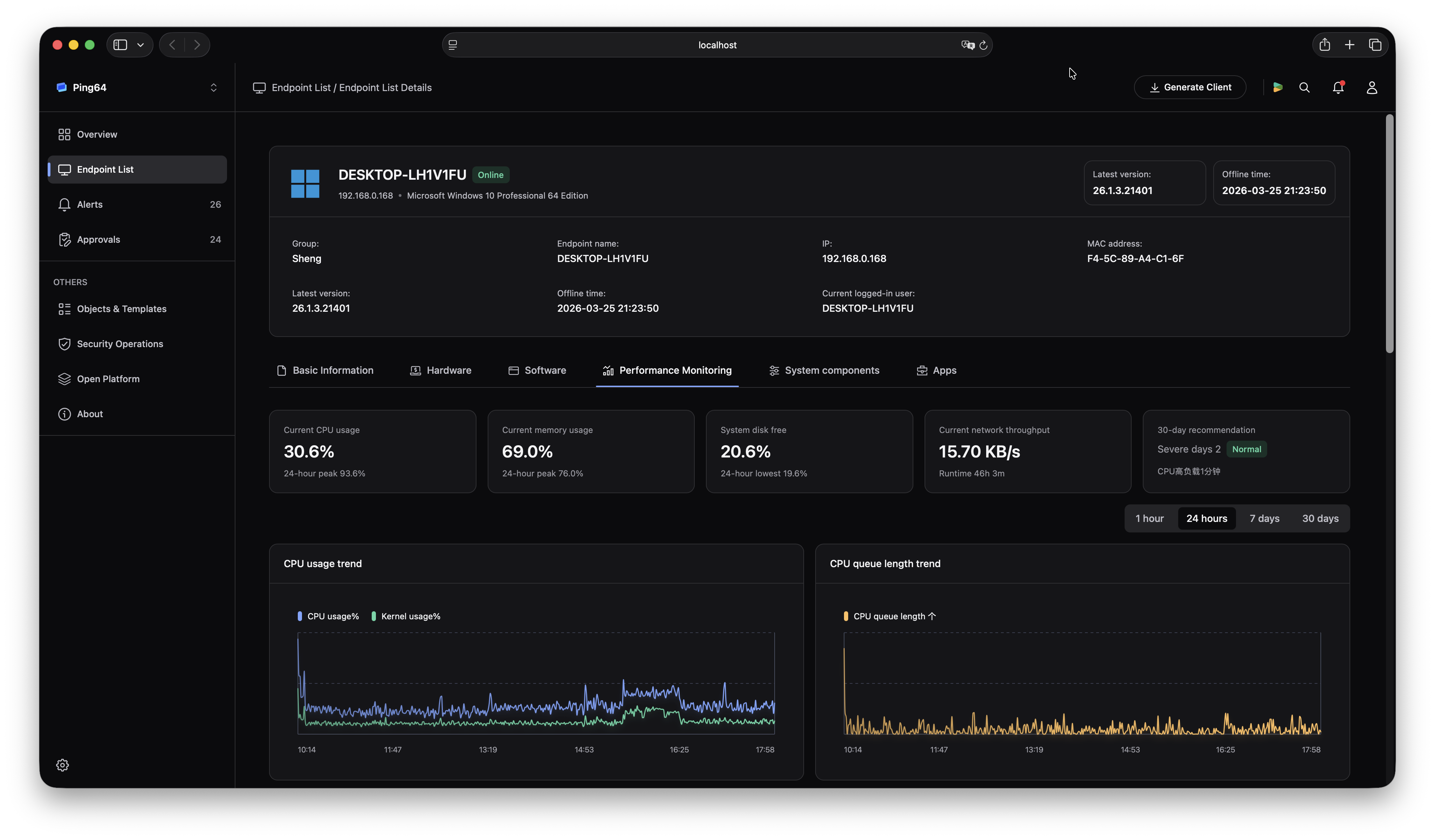
After the policy is delivered, open Data Security → Leak Tracking and review the records. A good verification method is to send a test file from a test endpoint through chat, browser, or email, then confirm that the record contains the endpoint name, transfer path, file name, timestamp, and any related screenshot, alert, or risk rating.
The management value of the Ping64 approach
Ping64 is useful not because it only says that a transfer happened, but because it turns outbound file activity into a traceable, filterable, reviewable audit event. Organizations can start with leak tracking, then gradually add backup, sensitive content analysis, and finer risk grading, so accountability shifts from guesswork to evidence-based response.
FAQ
Q1: Should every related feature be enabled from the beginning?
No. A more practical approach is to start with leak tracking, confirm stable audit generation, and then add screenshots, alerts, and risk grading in stages.
Q2: Why does browser-based upload need extra refinement?
Because many high-risk transfers happen through web workflows. If the record only shows a browser name, it is much harder to identify the actual exfiltration method.
Q3: Which business scenarios benefit most from this approach?
It is especially useful for design files, financial data, customer documents, and HR records where outbound activity must remain reviewable and attributable.





 Contact


 4 min
4 min